Glossary · Module 1: Foundational Framework and Core Architecture · Term 1
Topical Authority Formula
Koray Tuğberk GÜBÜR's equation for how a search engine assigns authority to a website, explained variable by variable.
Topical Authority = (Historical Data × Topical Coverage) / Cost of Retrieval
Quick definition. The Topical Authority Formula is Koray Tuğberk GÜBÜR’s equation for how a search engine assigns authority to a website. Topical Authority equals Historical Data multiplied by Topical Coverage, divided by Cost of Retrieval. A site gains authority when it covers a topic completely, collects positive user signals over time, and costs the search engine little to crawl, render, and serve.
Why the formula matters
Most SEO advice lists separate tasks: write content, build links, fix page speed. The Topical Authority Formula puts those tasks into one equation. Two variables raise authority and one lowers it. Every task you do either raises the numerator or lowers the denominator.
The formula also works as a diagnosis. A site with strong content and weak results has a low value in one of the three variables. Finding which one tells you where to work first.
Koray describes Topical Authority as a ranking state, not a fixed score. In a positive ranking state, new URLs receive fast crawl priority and enter the top results sooner. The glossary entry on positive vs negative ranking state covers that idea in detail.
The three variables
Topical Coverage (numerator)
Topical Coverage measures how completely, accurately, and deeply a source covers an ontology, an entity-attribute graph, and the network of queries connected to it. Koray splits it into three parts: vastness, depth, and granularity.
Vastness is the width of connected entities and subtopics. Depth is how well the content explains attributes with verifiable entity-attribute-value triples, statistics, and sub-contexts. Granularity is the decision whether an attribute deserves its own page, a heading, or a single sentence. The entries on vastness, depth, and momentum and the Query Deserves Triad explain those choices.
Coverage is the structured organization of every question and answer a subject needs. Mass publishing does not create it.
Historical Data (numerator)
Historical Data is the record of user interaction accumulated over time in the search engine’s query logs and Chrome sessions. It includes impressions, clicks, click-through rate, dwell time and scrolling, click-selection patterns, and post-click satisfaction.
Search engines use this record to check whether a source satisfies searchers over an extended period. Positions backed by history become sticky, which delays demotion during core updates. Authority earned on informational queries can also flow to commercial pages. Koray points to Navboost, Google’s click-log system, as the source of this data in the formula.
Cost of Retrieval (denominator)
Cost of Retrieval is the commercial, computational, and infrastructure expense a search engine pays to crawl, store, render, parse, evaluate, test, and serve a page. Search engines work to maximize advertising margin while minimizing computing cost, so a site that is cheap to process earns more crawling and testing. A site that is expensive to process gets less.
Koray’s sources describe three layers of this cost:
- Technical. Server time to first byte, the share of 200 and 304 responses, JavaScript and CSS execution overhead, and clean directory structures.
- Linguistic. Clear sentences, unambiguous “is-a” definitions, high information density per byte, and structured JSON-LD and entity-attribute-value triples that prevent costly disambiguation.
- Architectural. A high worth-to-index ratio, achieved by removing duplicate, thin, and canonical-conflicted URLs so crawlers skip assets that do not convert or carry authority.
The entries on Cost of Retrieval and Cost of Retrieval for LLMs and AI agents go further.
Right Visual Annotations (2026 extension)
In July 2026, Koray published an article on Search Engine Land that adds a multiplier to the equation: Right Visual Annotations. The term covers layout geometry, viewport position, and component choices, such as an interactive calculator, a comparison table, or an intake card placed as the centerpiece above the fold.
Google’s visual and multimodal parsers evaluate layout and function before deeper language analysis. If the visual centerpiece is missing, broken, or mismatched with the query’s intent, the document can be filtered out before textual relevance is scored. The visual semantics entry explains the mechanism.
Case studies with numbers
Koray’s published case studies show each variable at work. The figures below come from his talks, articles, and course material.
- Vizem.net, visa consultancy. Complete coverage of German visa types (Core Section) linked to content about living in Germany (Outer Section). The Outer Section pages captured impressions and collected search-session data, which raised the commercial service pages. Commercial keywords moved from low impressions to featured snippets.
- Svalbardi, bottled water. 27 published articles on health topics outranked Healthline, WebMD, and Medical News Today. After the business stopped e-commerce, the site still held over 400,000 organic clicks 3.5 years later without new articles. Updating only the year numbers on primary articles produced a 10% traffic increase.
- Transcriptor, AI transcription SaaS. Daily clicks grew from 200 to over 150,000 in three years. AI translation scaled multilingual coverage quickly while keeping Cost of Retrieval low.
- Strike.money, finance tool. The site had 400 indexed documents, yet Googlebot crawled it 40,000 to 60,000 times per day with a 99% 200/304 response rate. Traffic grew from 50 to over 3,000 clicks per day without links.
- A 100,000-page programmatic site. After the main calculator moved into the centerpiece above the fold, clicks rose from 3.47 million to 4.53 million (+30.5%), impressions rose from 84.1 million to 167 million (+98.6%), and average position improved by 0.4. This is the Right Visual Annotations multiplier in practice.
- BlacktailNYC, cocktail recipes. A domain with human authors grew from 0 to 8,000 daily clicks, then reached 65,000 daily clicks with mass AI content. After the unvetted AI content was removed, traffic settled at 7,000 daily clicks. The case shows the cost of publishing faster than a human team could.
How to apply the formula
Koray’s sources and the course lectures give this order of work:
- Define the source context. Answer who you are, how you monetize, and what your central entity is. These answers explain to a search engine why it should trust your domain for the topic. See source context.
- Split the map into Core and Outer sections. The Core Section holds commercial pages. The Outer Section holds definitions, guides, sub-attributes, and calculators. Publish the Core Section first.
- Aim for impressions. On a new domain or cluster, target low-competition informational concepts first. Koray reports that once a domain reaches 10,000 daily impressions, search engines begin re-ranking passes, expand crawl budgets, and test the site for featured snippets.
- Pass authority to money pages. Link Outer Section pages to Core Section pages with precise anchor text and surrounding context so accumulated user signals flow upward.
- Lower the Cost of Retrieval. Keep time to first byte under 100 ms (40 ms is better), keep clean 200 and 304 responses above 99%, and remove redirect chains and 404 errors. Place the centerpiece above the fold. Open each page with a short is-a definition and skip narrative introductions.
- Keep a steady cadence. Publish at a pace a human team can sustain. Audit, re-sentence, and add newly emerging queries to every core document at least once every six months.
Common mistakes
- Targeting isolated keywords. Disconnected pages for single keywords do not answer full query paths. Build an interconnected network instead.
- Publishing the Outer Section first. Informational content launched before the commercial pages sets the site’s source term vector around the wrong topics. Shifting authority back to the services then becomes difficult.
- Ignoring Cost of Retrieval. Long, high-quality articles are not enough on their own. If a site is expensive to crawl, render, parse, and test, search engines decline to spend crawl budget or run advanced models on it.
- Flooding the index. Koray warns that publishing at 500 to 5,000 pages per day can trigger machine-generation classifiers, which lead to manual actions or algorithmic suppression.
- Losing the click after the rank. If searchers return to the results page because the top of the page is weak or a promised tool is missing, search engines reverse the ranking based on click satisfaction.
- Treating authority as permanent. Topic borders expand, competitors change their coverage, and factual consensus moves. Without maintenance, traffic decays gradually over 12 to 24 months.
Related terms
- Central Entity: the subject the whole site is about, and the anchor for Topical Coverage.
- Source Context: how the site earns money, which decides what coverage counts.
- Core Section and Outer Section: the two halves of the map that split revenue pages from the pages that build Historical Data.
- Cost of Retrieval: the denominator, explored in its own entry.
- Entity-Attribute-Value Architecture: the structure that makes depth measurable.
- Visual Semantics: the layout side of the 2026 extension.
Patents and Google leak notes
Patents describe how a search system could work. They do not prove the weighting in use today. Read the filings below as evidence of the design, not as a guarantee of a live signal.
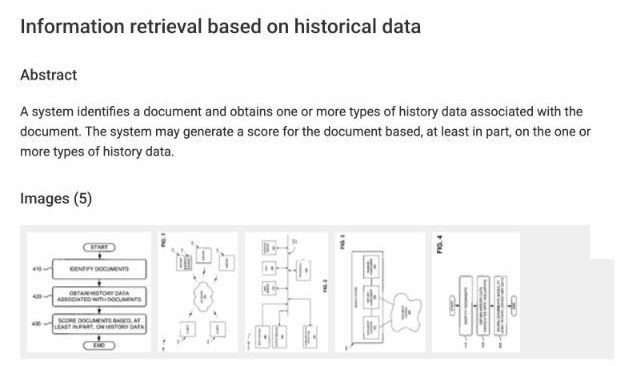
Historical Data. US-7346839-B2, “Information retrieval based on historical data” (Google, filed 2003, published 2008), describes scoring documents with signals that change over time. Its claims list document age, link age, link growth rate, anchor-text age, user-selection history, and query-based click patterns. This is the closest patent match to the Historical Data variable.
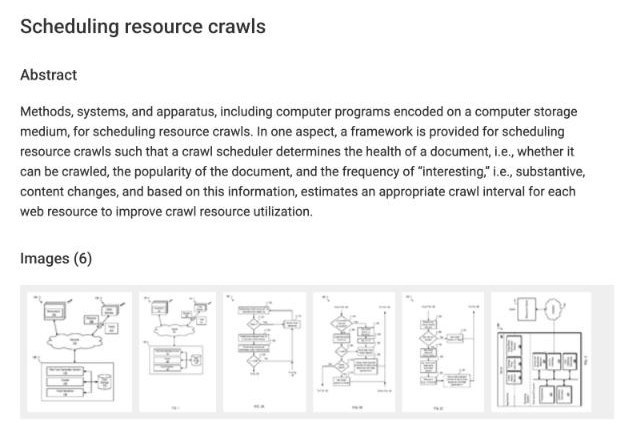
Cost of Retrieval. US-8868541-B2, “Scheduling resource crawls” (Google, filed 2011), has a crawl scheduler judge the health of a document before deciding how to crawl it. US-10621241-B2, “Scheduler for search engine crawler” (Google, filed 2014), schedules document crawling from a list of document identifiers. Both show crawl effort treated as a budget that the system allocates.
Google Content Warehouse API leak. The leaked documentation lists attributes that match each variable. For Historical Data, click records such as goodClicks, badClicks, lastLongestClicks, and impressions sit under the Navboost modules. For Topical Coverage, the topic-embedding attributes siteFocusScore and siteRadius describe how focused a site is on one topic. For Cost of Retrieval, the crawler change-rate data, including simhashIsTrusted, supports deduplication shortcuts. The attribute names appear here as plain text.
Learn it in the course
Koray’s sources for this term include the Oncrawl case study “Importance of Topical Authority: A Semantic SEO Case Study” (February 2021), the Search Engine Land articles on visual semantics and query templates (July and August 2026), and the keynote “4000x Growth in 3 Years, From 200 to 150.000 Clicks a Day.” The course lectures that carry the formula are the Topical Map components lecture, the lecture on central search intent and site-wide n-grams, the lecture on publication date, frequency, and configuration, and the lecture on Cost of Retrieval.
The course page holds the full lesson series by Behzad Hussain. The roadmap shows where this term sits in the learning order.
Frequently asked questions
Is the Topical Authority Formula an official Google formula?
No. Koray Tuğberk GÜBÜR formulated it as a model of how search engines assign authority. Patents and the leaked API documentation support its parts, but Google has not published this equation.
Which variable should I improve first?
Start with the one that is weakest on your site. A new domain usually needs Topical Coverage. A large site with thin or duplicate pages usually needs a lower Cost of Retrieval. A site with traffic and no conversions needs a closer look at Historical Data and where it flows.
How long does it take to see results?
Koray’s case studies span months to years. The language-learning case in his sources reached 200,000 monthly clicks in 5 months, and the transcription SaaS case took 3 years to reach 150,000 daily clicks. Results depend on the starting domain, the niche, and the publishing cadence.
Does Topical Authority last forever?
No. Koray’s sources warn that abandoning maintenance causes gradual traffic decay over 12 to 24 months. The six-month content configuration rule exists to prevent that.

Written by
Personal Injury SEO Strategist, founder of Rank Brilliance, and Certified Semantic SEO Expert in Koray’s methodology. He built this free Semantic SEO course and its 96-term glossary. Based on Koray Tuğberk GÜBÜR’s framework.
Last updated · Book a call